2/16/2018
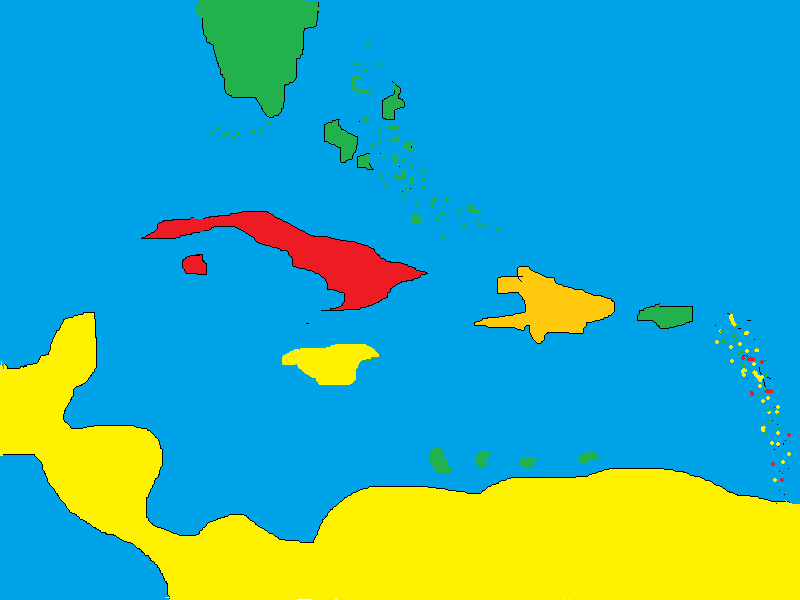
Red Group
The island of Cuba is the largest in the Caribbean region and its capital is Havanna.
St Kitts is known for its rainforested mountians and beaches of black, gray and white sand. It is the larger of the two islands that make up the country of St Kitts and Nevis
Jamaica is considered the birthplace of the type of muscic known as Reggae and is known for its lush topography of coral reef beaches and forested mountians.
The country of Haiti is the western half of the island of Hispaniola which it shares with the country of . It is still recovering from a massive earthquake in 2010. The islands rests on two massive fault lines.
Barbados is an independant British common wealth. It has buildings dating back to the 17th century ands its capital is a cruise-ship port.
Date of Article: September 19 2017
Headline: West Indies
Author: Colin Graham, Clarke Bridget and M Berteton
Source of the Article: Colin Graham Clarke and Bridget M.Berteron. West
1.Physiographic- the study of the world and physical patterns
2.Alignment- when things line up in a strait order or fasion
3.Maritime- Connected to the sea
Who: The people of the Caribbean and their nationalitys. Many were decendents of Slave laborers while others were decendents of the Spanish, French, Dutch or English
What: The physical features of the islands of the Caribbean including mountian ranges and yearly precipitation.
When: It discribes multiple times but the one most often used is current time
Where: The Greater and Lesser Antilles as well as the Bahamas
Why: I learned that their was once a massive mountian range running all the way down the Caribbean region.
1. It stated that there was once a massive mountian range that once ran all the way down the Caribbean region. I wonder what life would be like if that mountian range still existed?
2.Why are all of the islands forming an arc?
3. Why are the Lesser Antilles made of different materials?
